Metal Roof Leak: Is It the Panel, the Fastener, or the Flashing?
Most metal roof leaks trace back to a fastener or a flashing detail, not the panel steel. Here's how to read the signs.
September 17, 2026 · 4 min read
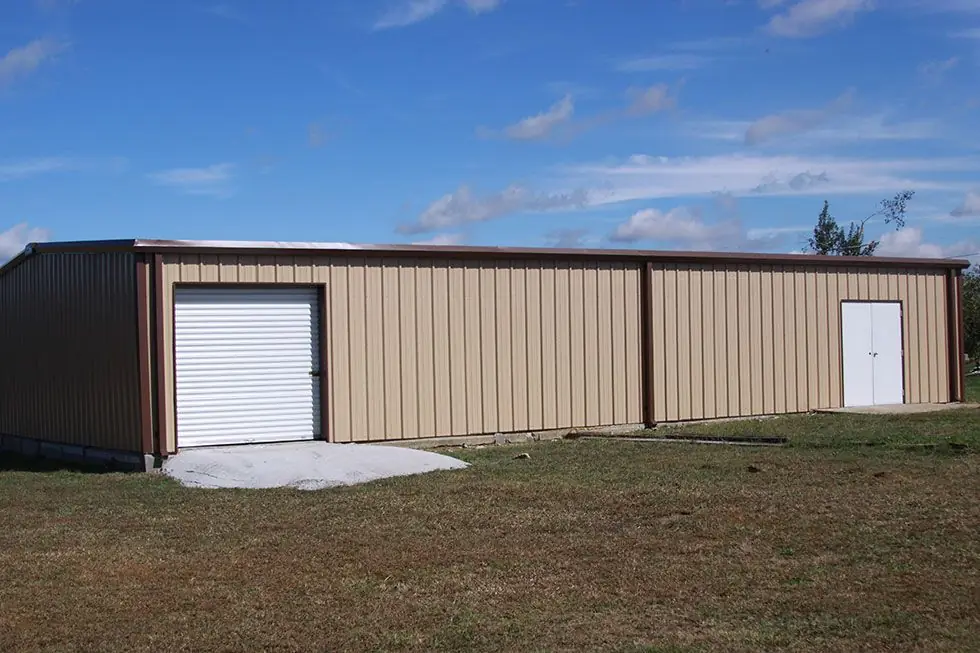
A leak on a metal building almost never comes from one dramatic hole punched through the roof. Nine times out of ten it's water finding a quiet path along a seam, around a screw, or under a piece of trim, and it can travel a surprising distance sideways before it ever drips onto something you notice. Knowing roughly where to look, panel, fastener, or flashing, makes the first phone call a lot more useful.
Start with the panel itself
Panels are the field of the roof, the long painted sheets running from ridge to eave. A true panel leak is rare on a roof that went up correctly, because each panel is a solid piece of steel with a factory paint system baked onto it. What actually fails is usually not the steel itself, it's something attached to it or lapped over it. You can get small rust spots after years of standing water or leaves sitting in a low spot on a poorly sloped section, but a fresh drip during a hard rain almost never traces back to plain panel steel with no other damage nearby.
Fasteners loosen long before they fail outright
Most exposed-fastener metal roofs are held down with screws that carry a rubber washer under the head. That washer is doing real work, compressing down against the panel to seal the hole the screw made going in. Sun, wind, and years of temperature swings make the panel expand and contract, and that constant small movement works the screw hole a little wider with every cycle. Eventually the washer hardens, cracks, or backs off just enough that wind-driven rain gets under the head. A fastener leak tends to show up as a stain running in a rough line, since fasteners sit in rows along the panel ribs, and it often gets noticeably worse in a storm with strong wind out of one direction.
Flashing is where most real leaks start
Flashing is the trim that covers a transition rather than a flat run of panel: where a roof meets a wall, where two roof planes come together, around a pipe or a vent, along the ridge, along the eave. None of those spots are a single unbroken sheet of steel, so they depend on overlaps, sealant, and the right slope to shed water instead of holding it. A flashing leak very often shows up somewhere other than directly above the actual gap, because water runs sideways along the underside of a panel before it finds a screw hole or a seam it can drip through. That's the single biggest reason a leak can look like a mystery from the ground floor.
Why the same leak can come and go with the weather
A leak that only shows up sometimes isn't imagining things, and it isn't a sign the problem fixed itself between storms. Wind direction changes which side of the roof is actually being driven with rain, and a flashing detail that sheds water fine in a straight downpour can take on water the moment wind pushes rain sideways into a lap joint from a specific angle. Heat plays its own part too, a hot afternoon expands panel steel just enough to open a gap slightly at a seam that seals tight again once things cool overnight. None of that means the leak is minor. It usually means the exact conditions that cause it just haven't lined up on every visit, and it's worth mentioning to whoever comes out exactly what the weather was doing the last time it happened.
What to check and photograph before you call
A little homework before the phone call saves time on the first visit and helps whoever comes out go straight to the likely spot instead of walking the whole roof cold.
- Note exactly where the stain or drip shows up inside the building, and how far it sits from the nearest wall, corner, or roof penetration
- Photograph the ceiling stain from underneath, including any duct, beam, or fixture nearby that could be catching water and carrying it sideways before it drips
- If you can safely see the roof from a ladder or a nearby vantage point without walking on it, photograph any spot where two roof sections meet, any pipe or vent penetration, and any visible rust streaks
- Note whether the leak only shows up with wind from a particular direction, since that points toward flashing or a lapped seam rather than a fastener sitting straight overhead
- Do not walk out onto a wet metal roof yourself to inspect it
Hall Construction runs a free on-site leak assessment, no charge just to come out, survey the damage, and tell you plainly whether it's a panel, a fastener, or a flashing problem and what it will take to put right. That assessment covers the whole service area out of Decatur, through Morgan, Limestone, Madison, and Lauderdale counties and on into southern Tennessee, so there's no reason to guess at a leak before someone who does this every day has a look at it.
Hall Construction, (256) 566-6716
Call (256) 566-6716More articles
Sizing a Metal Building Around What's Actually Going Inside It
The right metal building starts with what you're putting inside it, not a footprint picked off a floor plan.
What a Year-Round Metal Building Maintenance Program Actually Covers
A year-round maintenance program isn't one visit, it's a sequence, and each pass covers something different.