Putting Up a Building Without Closing the Business
A working business doesn't have to shut down to get a metal building erected or repaired around it.
September 17, 2026 · 3 min read
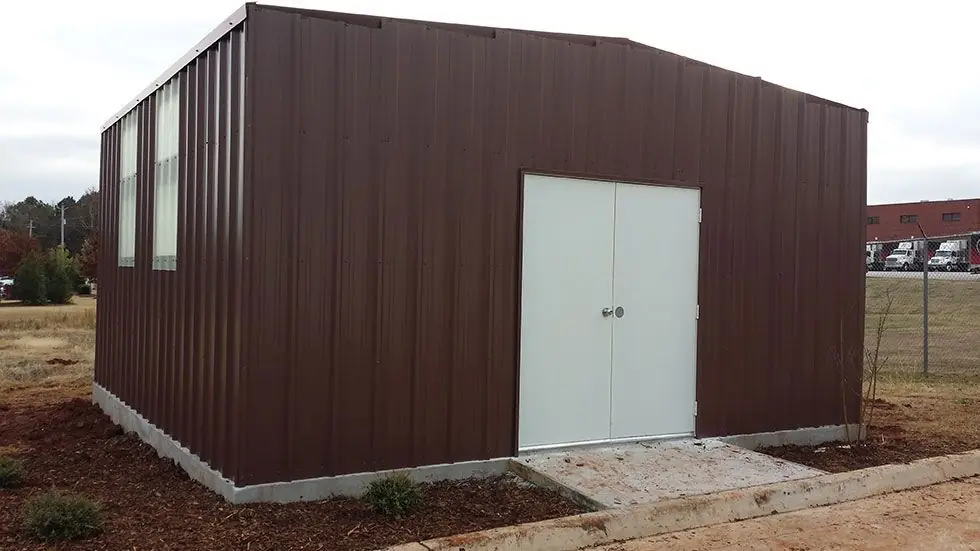
A shopping center, a school, a gym, or a warehouse rarely has the luxury of closing its doors while construction happens around it. Whether it's a new building going up next to an operating one, or a repair on a roof over a space that's in daily use, the work still has to get done, it just has to get done without shutting the business down to do it.
Why timing matters more than most people expect
The biggest disruption from construction usually isn't the finished result, it's the noise, the dust, the equipment staged in a parking lot, and the crew moving through spaces customers or staff are trying to use at the same time. A business that depends on daytime foot traffic, a store, a church, a gym with regular class times, feels every one of those disruptions directly in its own working hours. Shifting the loudest, most disruptive parts of a job to after hours takes that friction away from the exact hours the business needs to run normally.
What actually moves to after hours
Not every part of a job needs to happen at night, and trying to run an entire project after hours would slow it down for no real benefit. What typically shifts is the loudest and most disruptive work, structural erection, roof tear-off and replacement, and anything involving heavy equipment moving through or near areas customers or staff use during the day. Quieter finish work, and anything that doesn't interfere with normal foot traffic, can often stay on a regular daytime schedule without anyone noticing.
Phasing keeps the site usable the whole way through
On a bigger job, phasing means breaking the work into sections so that only part of a building or site is ever out of commission at once. A parking lot gets worked in sections rather than closed entirely. A roof gets torn off and replaced in manageable runs rather than opened up all at once and left exposed. An entrance stays usable while work happens on a different side of the building. None of that happens by accident, it comes from planning the sequence of the job around how the business actually operates day to day, not just around what's easiest for the crew.
Communication during the job matters as much as the schedule
A phased, after-hours plan only holds up if the people running the business day to day actually know what's happening and when. Staff opening up in the morning need to know which entrance is affected that week, which section of parking is roped off, and who to call if something looks different than expected overnight. Customers benefit from the same heads up, even a simple sign at an affected entrance saves confusion and complaints that have nothing to do with the actual construction and everything to do with nobody knowing a change was coming. A crew that treats the schedule as fixed and unchanging, without checking back in as the job moves along, is the same crew that ends up working around a surprise event, a delivery truck, a scheduled inspection at the site, a weekend function, that nobody flagged in advance. Keeping that communication open both ways, not just handed down once at the start, is what actually protects the business's normal operating hours through the whole job rather than just on day one.
What a business owner should ask before work starts
A short, direct conversation before the first day of work heads off most of the disruption complaints that come up later.
- Which parts of the job genuinely need to happen after hours, and which can run on a normal daytime schedule
- How the site or parking area gets staged so equipment and material storage don't block customer access
- Whether the work can be phased so only one section is affected at a time, rather than the whole building or lot at once
- What happens on a weekend, since office hours run Monday through Friday but emergency and specialty work is still available outside that window
- Who to call directly if something about the schedule needs to change once work is underway
Hall Construction runs after-hours construction specifically so an operating business doesn't have to disrupt its own schedule to get a metal building erected or repaired, on jobs from shopping centers and churches to gyms, schools, and warehouses across the Decatur area and into southern Tennessee. A free estimate and consultation up front, with no obligation, is the right place to work out exactly what can move to after hours and what can stay on the regular clock.
Hall Construction, (256) 566-6716
Call (256) 566-6716More articles
Metal Roof Leak: Is It the Panel, the Fastener, or the Flashing?
Most metal roof leaks trace back to a fastener or a flashing detail, not the panel steel. Here's how to read the signs.
Sizing a Metal Building Around What's Actually Going Inside It
The right metal building starts with what you're putting inside it, not a footprint picked off a floor plan.